
Best Playsets by Age (2–12 Years Old)
How to Choose the Right Playset for Your Family
Choosing a backyard playset is not just about adding something fun outside. For most families, it is about creating a space kids will actually use, year after year.
At PlayStar, we see the same decision patterns from parents every day: yard size, long-term durability, and whether the playset will still make sense as kids grow.
Age is important, but the real differences come from how kids play, how often they use the structure, and how much challenge they need over time.
Choose a Playset That Grows With Your Kids
One of the biggest advantages of a traditional wood playset is flexibility over time.
With PlayStar, you are not buying something your kids will outgrow in a couple of years. You are building a structure that can evolve as they do.
For younger kids, a setup might start simple. A tower with a sandbox underneath creates a shaded space where toddlers can play safely while staying close to the ground.
As they grow, that same structure becomes something completely different. The tower turns into a climbing destination. The slide becomes part of daily play. What started as a simple setup becomes the center of activity.
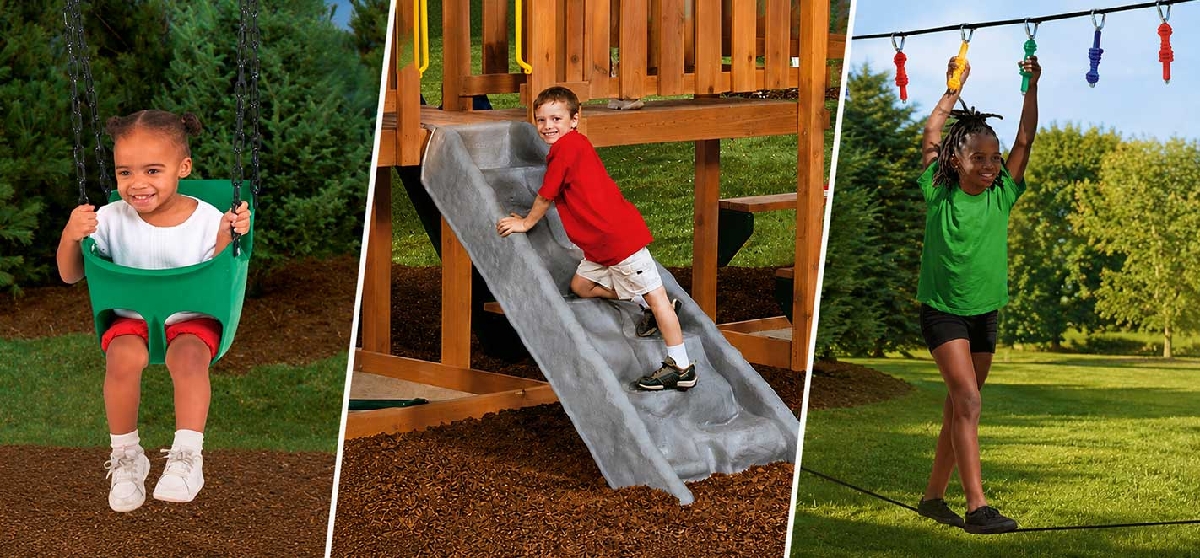
Swings are another example. A toddler bucket swing can be used early on, then easily swapped out for a standard swing seat, glider, or even gym rings as kids get older and more active.
This is how PlayStar systems are designed to work. The core structure stays strong and relevant, while accessories can be adjusted over time to match how your kids play.
If your kids are on the younger side, it often makes more sense to choose a playset that has room to grow, rather than something they will outgrow quickly. A few simple upgrades over time can extend the life of the playset for years.
Ages 2-4: Early Exploration and Confidence Building
At this stage, play is simple and closely supervised. Kids are learning balance, movement, and coordination.
What Works Best
- Low-height platforms close to the ground
- Gentle slides with short drop height
- Bucket-style or fully supported swings
- Simple step and ladder access
What Matters Most to Parents
Parents are focused on stability, safety perception, and ease of supervision. A solid, grounded structure matters more than features at this stage.
Ages 5-7: The Core Play Years
This is when backyard playsets see the most consistent daily use. Kids are active, imaginative, and constantly moving between different types of play.
What Works Best
- Multi-level setups
- Swings paired with slides
- Beginner climbing features
- Combination layouts for continuous movement
How Play Changes
Children stop using individual parts in isolation and start treating the entire structure as one environment. It becomes a fort, clubhouse, obstacle course, or whatever they imagine that day.
For parents, this is also when durability and long-term usability start to matter more.
Ages 8-10: Strength, Challenge, and Independence
At this stage, kids become more physically confident and begin testing limits.
What Works Best
- Taller structures
- Rope ladders and climbing walls
- Longer and faster slides
- Add-on accessories for progression
What Changes for Parents
This is where long-term value becomes more visible. Smaller playsets often start to feel limited or outgrown.
Many parents begin thinking about whether the playset will still feel relevant in a couple of years. Material strength and structural design matter more here than extra features.
Ages 10-12: Pre-Teen Use and Extended Value
Use becomes less frequent but more intentional. The playset shifts from constant activity to occasional challenge and social space.
What Still Gets Used
- Tall platforms and climbing features
- Rope systems and nets
- Hangout-friendly spaces under or around the structure
- Modular or expandable add-ons
What Changes
Kids want something that still feels engaging but no longer “too young.” Play becomes more social and less structured.
Designs that allow flexibility tend to stay relevant longer through this stage.
What Really Matters When Choosing a Playset
Across all ages, three factors consistently influence buying decisions more than anything else.
- Yard Fit - If the playset does not fit the space comfortably, everything else becomes irrelevant. Layout, clearance, and long-term yard use all matter here.
- Assembly Confidence - Most hesitation comes from uncertainty around installation. Clear instructions, structured support, and optional professional assembly help reduce that uncertainty and make the decision easier. PlayStar offers ready-to-assemble systems by default, with factory-built options available for convenience.
- Long-Term Value - A playset is expected to last through multiple stages of childhood. Durability, material quality, and thoughtful design determine whether it remains useful or gets replaced early.
Why Families Choose Backyard Playsets
A backyard playset is not just entertainment. It creates consistent outdoor activity and gives kids a place to play close to home.
For many families, the objective is to create a space where kids naturally choose to spend time outside.
The best playset is the one that fits your yard, fits your children as they grow, and feels right from the moment it is installed.