
How to Choose the Right Playset for Your Family
Step 1: Understand Your Space
The right playset starts with your yard, not the product.
Most families make the same mistake. They choose a playset they like first, then try to make it fit later. That usually leads to a setup that feels too tight, too large for the space, or not positioned well for everyday use.
A playset is not just its footprint. It also requires a full safety and movement area around it that needs to stay open and usable.
In many cases, the challenge is planning for that total space upfront. See this article for more information on choosing the right size playset for your yard.
Smaller Yards
- Focus on compact but efficient designs
- Prioritize vertical play structures
- Careful attention to clearance space is essential
- Shop Playsets For Smaller Back Yards
Medium Yards
- Best balance of flexibility and features
- Room for swings, slides, and add-ons
- Most common backyard category
- Shop playgrounds for medium size back yards
Large Yards
- Multi-zone play areas possible
- Higher customization and expansion potential
- Best for long-term growth setups
- Shop For Large Backyard Playsets
What Matters Most in Every Yard
- Full safety clearance, not just structure size
- Flat and level ground across the install area
- Proper drainage for long-term stability
- Clear visibility from the house
If a space feels tight before installation, it will feel even more constrained once swings and movement zones are active.
Planning Your Backyard Playset
Step 2: Match It to Their Age and Energy
Kids grow fast. The right playset should match where they are now, but still stay relevant as they grow older.
The key is not just age. It is how your child plays, how confident they are, and how often they use physical versus imaginative activity.
Ages 2 to 5
- Lower platforms and gentle play
- Simple slides and swings
- Focus on supervision and comfort
Ages 5 to 8
- More active climbing and swinging
- Increased independence
- Higher engagement and variety
Ages 8 to 12
- Advanced climbing features
- Physical challenge and endurance play
- Longer play sessions and creativity
Think Beyond Today
The most common mistake is choosing for the current stage instead of the next stage. That is what leads to early underuse.
A good playset is not just about today. It is about how long it stays fun as your kids grow.
Best Playsets by Age (2–12 Years Old)
Step 3: Decide How Your Backyard Should Feel
Most parents do not choose playsets based on features. They choose based on the kind of childhood moments they want to create.
Active Play
- High-energy movement
- Climbing, swinging, and sliding
- Best for multiple kids
Imagination Play
- Clubhouse-style setups
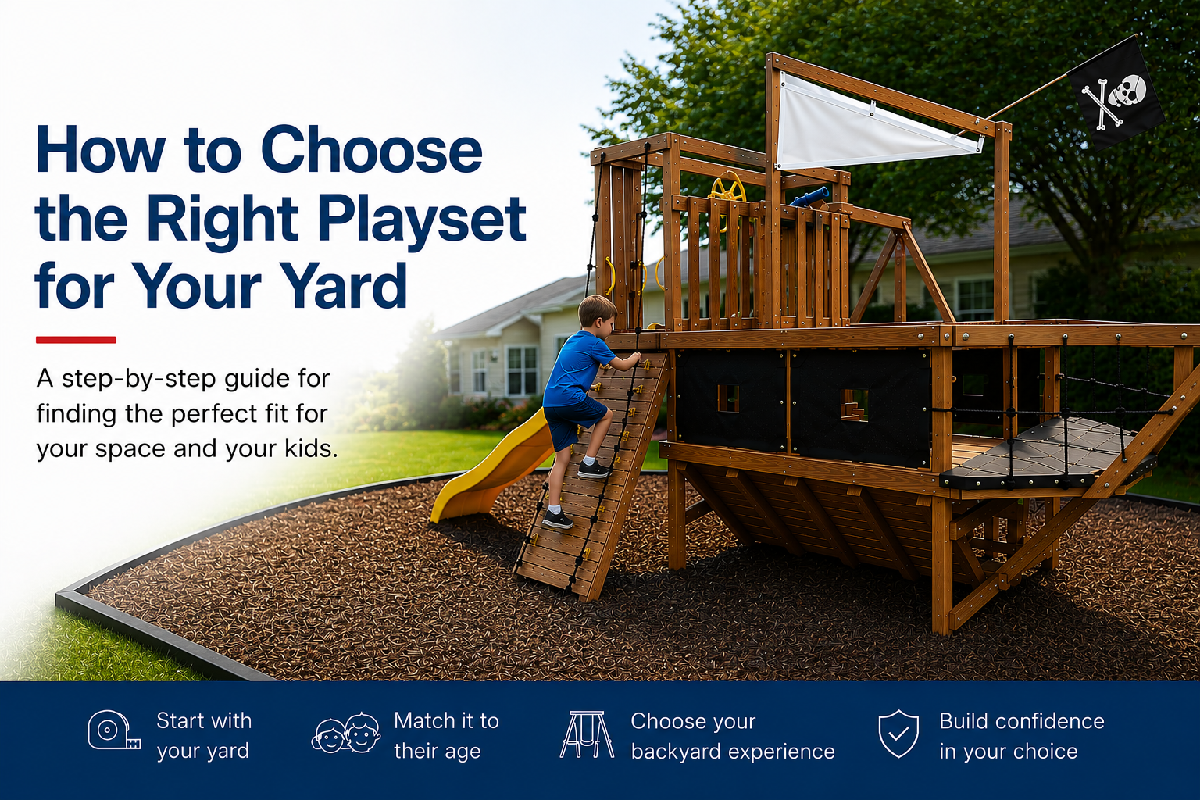
- Role play and creativity - Like our pirate ship back yard playground
- Strong for younger children
All-in-One Backyard Setup
- Balanced mix of everything
- Designed for long-term use
- Most flexible option
The best playset is one that matches how your kids naturally spend their time outside, rather than one with the most features.
You Are Not Just Buying a Playset. You Are Choosing Years of Backyard Memories.
Most hesitation comes down to three things:
- Will it fit my yard correctly?
- Will my kids actually use it?
- Am I making the right long-term choice?
This page exists to remove that uncertainty. Most hesitation comes from not being fully confident about fit, usage, and long-term value.
What Helps Families Feel Confident
- Clear sizing based on real yard requirements
- Designs made for everyday family use
- Support available if questions come up
- Systems designed to grow with your kids
Seeing how the playset fits into your yard and your kids’ current stage removes most of the uncertainty immediately.
What Most Parents Get Wrong
Buying a playset is exciting, but that is also where mistakes happen.
- Choosing size based on emotion instead of yard reality
- Focusing only on price instead of long-term value
- Ignoring how kids will grow into the structure
- Not planning for proper ground preparation