
Safe Surfaces for Playsets
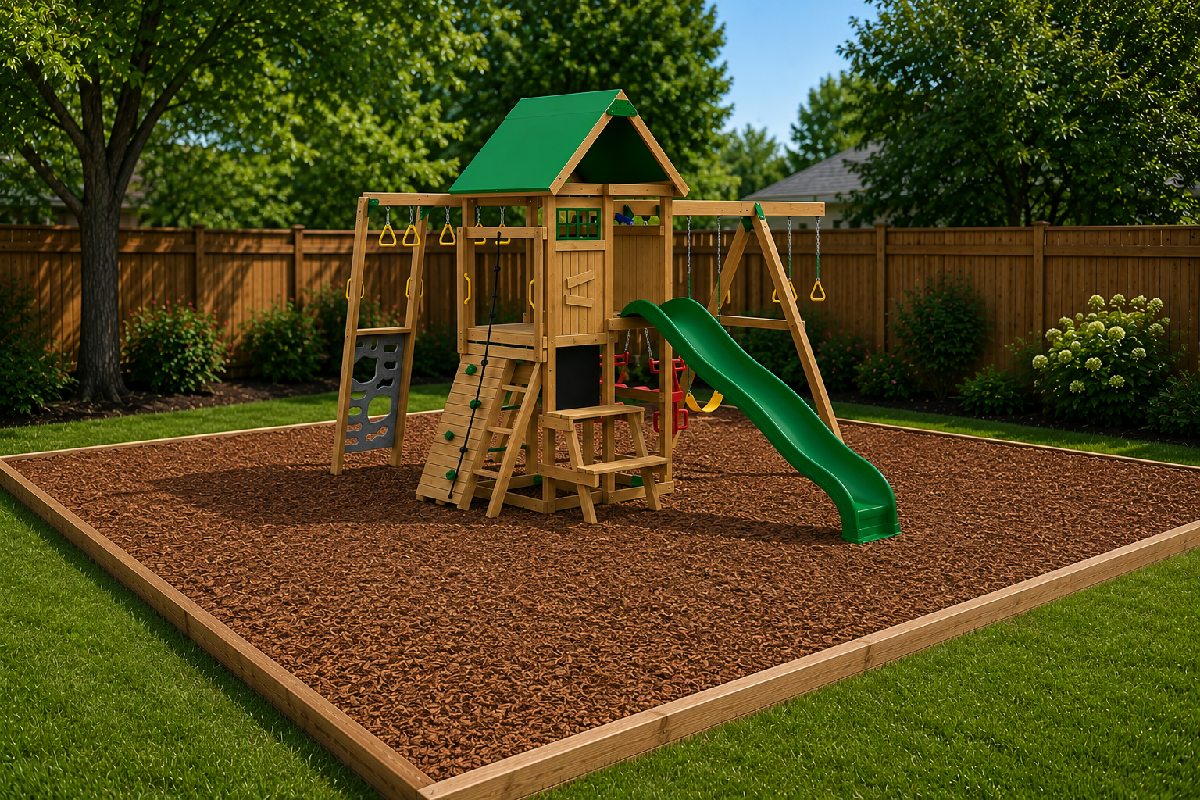
What to Put Under a Playset: Professional Guide to Mulch and Rubber Safety Surfaces
Choosing the right safety surface under a playset is crucial for ensuring that children enjoy a safe and fun outdoor experience. Many parents often find themselves grappling with the decision of what material will best protect their little ones while providing a suitable environment for play.
This guide explores the various safety surfacing options available, including mulch, fine sand, gravel, rubber mulch, and premium playground surfacing systems. Understanding these options will help families make informed decisions that improve safety while creating a fun backyard play environment.
For detailed safety guidelines and recommendations, please visit our playset safety guidelines.
In the following sections, we cover the advantages and disadvantages of each safety surface, installation considerations, maintenance requirements, and important safety recommendations to help you create a secure and enjoyable play area.
Comprehensive Guide on Safety Surfaces for Playsets
When it comes to outdoor wooden playsets and swing sets, selecting the appropriate safety surface is essential for reducing injury risk and improving play safety. The ideal surface provides adequate cushioning to absorb impacts from falls while meeting ASTM playground safety standards.
Choosing the right surfacing material can significantly reduce the likelihood of serious injuries and create a safer environment for children of all ages.
1. Mulch
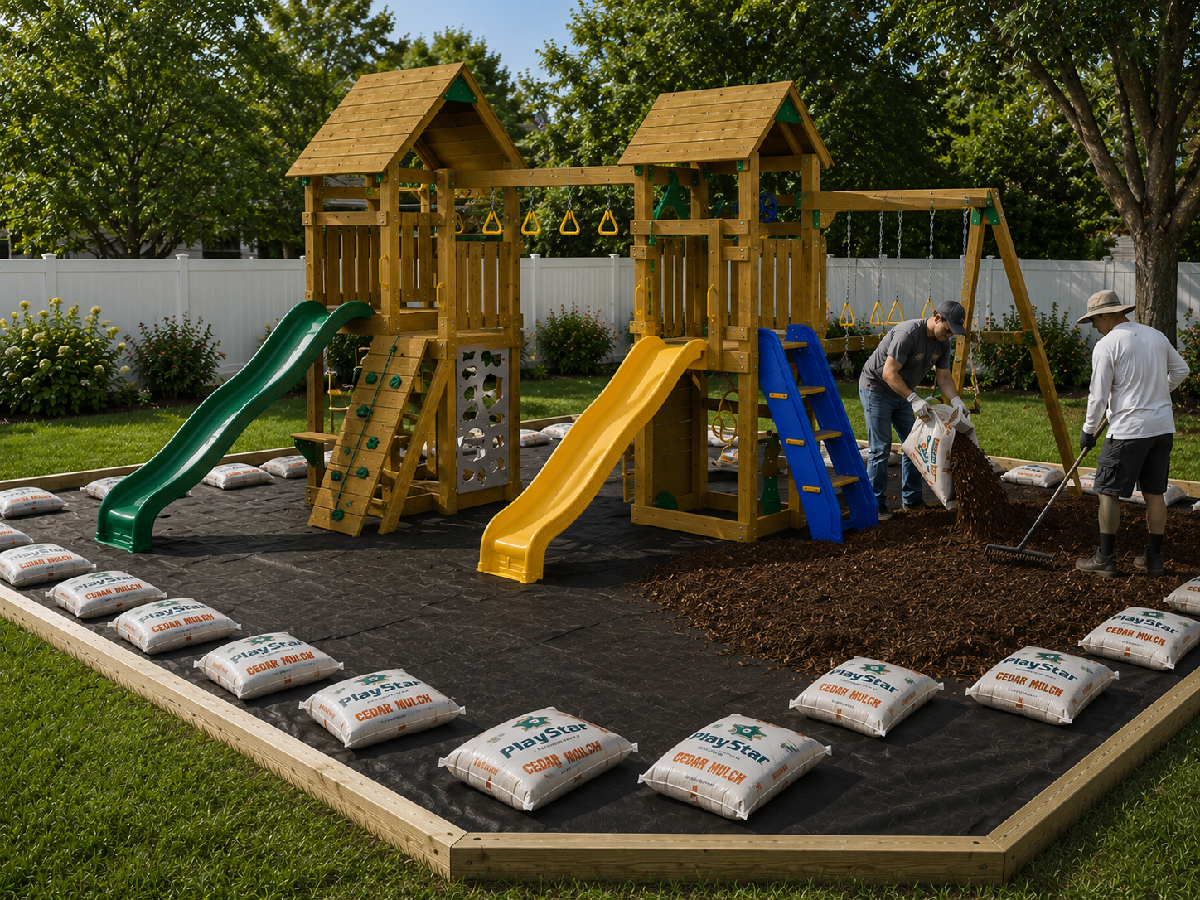
Mulch is one of the most popular safety surfaces for residential playsets because of its natural appearance and excellent shock-absorbing properties. Made from wood chips or shredded bark, mulch creates a softer landing area while blending naturally into most backyard landscapes.
For best results, clear the area of grass, roots, and debris before installation. The surface should be leveled and covered with a minimum depth of 12 inches of mulch.
Benefits of Mulch
- Excellent shock absorption.
- Cost-effective compared to many alternatives.
- Natural appearance that complements outdoor spaces.
- Widely available and easy to install.
Mulch should extend beyond the footprint of the playset and cover the entire safety zone surrounding swings, playset slides, and climbing structures.
2. Fine Sand or Gravel
Fine sand and fine gravel are practical safety surface options that offer good shock absorption and natural drainage. These materials are affordable, easy to source, and relatively simple to install.
Installation typically involves leveling the area and spreading the material evenly to the recommended depth.
Benefits of Fine Sand or Gravel
- Good shock absorption.
- Excellent drainage properties.
- Natural appearance.
- Affordable and easy to replenish.
Maintain a depth of 12 inches and regularly inspect the area for compaction, displacement, or erosion caused by weather and play activity.
3. Rubber Mulch
Rubber mulch is a popular synthetic playground surface that provides exceptional cushioning with minimal maintenance requirements. Available in bags through most home improvement retailers, rubber mulch offers a durable, long-lasting alternative to natural materials.
Unlike wood products, rubber mulch does not decompose and resists compaction, helping maintain consistent shock absorption over time.
For residential playsets, rubber mulch should generally be installed at a depth of 9 to 12 inches.
Benefits of Rubber Mulch
- Superior shock absorption.
- Long-lasting durability.
- Minimal maintenance requirements.
- Resistant to insects, weather, and decay.
- Available in multiple colors.
Because it does not settle or break down like organic materials, rubber mulch remains an attractive and effective safety surface for many years.
4. Premium Safety Surfaces: Poured-in-Place Rubber, Cork, and Artificial Turf
For homeowners seeking premium safety surfacing, poured-in-place rubber, cork products, and artificial turf provide excellent durability, accessibility, and visual appeal.
These materials are commonly found in public playgrounds and high-end residential installations. Because installation requires specialized equipment and expertise, professional contractors should be consulted.
When evaluating these options, discuss your playset's fall heights and configuration with the installer to ensure the proper surface thickness is selected to meet safety standards.
Benefits of Premium Playground Surfaces
- Exceptional durability.
- Low maintenance.
- Consistent appearance.
- Accessibility-friendly.
- Long-term performance.
General Recommendations for Safety Surfacing
Selecting the right safety surface involves considering the required coverage area, installation depth, maintenance requirements, and expected long-term use.
Recommended minimum depths include:
- Mulch: 12 inches
- Fine Sand: 12 inches
- Fine Gravel: 12 inches
- Rubber Mulch: 9 to 12 inches
The safety surface should extend throughout the entire play area and remain properly maintained to provide effective fall protection over time.
Playground Surfacing Materials and Safety Considerations
According to the U.S. Consumer Product Safety Commission, approximately 100,000 children are treated in emergency rooms each year for playground-related fall injuries. Many of the most serious injuries involve impacts to the head, making proper surfacing one of the most important playground safety considerations.
Never install playground equipment on hard surfaces such as concrete, asphalt, or packed dirt. While grass may initially seem adequate, it often becomes compacted over time and loses its ability to absorb impacts.
Recommended loose-fill playground surfaces include:
- Wood chips
- Mulch
- Fine sand
- Fine gravel
- Rubber mulch
These materials must be installed and maintained at the proper depths to provide effective protection.
Recommended Safety Surface Depths
| Material | Recommended Depth | Protection Level |
|---|---|---|
| Wood Chips | 12 inches | High |
| Mulch | 12 inches | Moderate to High |
| Fine Sand | 12 inches | High |
| Fine Gravel | 12 inches | High |
| Rubber Mulch | 9 to 12 inches | Very High |
Safety surfacing should extend at least six feet beyond stationary equipment such as climbers and slides.
For swings, the protective surface should extend both in front of and behind the swing set by a distance equal to twice the height of the swing pivot point.
Regular inspections and replenishment are necessary to maintain proper cushioning and protection.
Other Surface Options
Beyond loose-fill materials, homeowners may consider premium alternatives such as cork surfacing, poured-in-place rubber, or artificial turf systems.
Although these surfaces are more expensive and generally require professional installation, they offer superior aesthetics, accessibility, and durability. These options are commonly used in schools, parks, and high-end residential playgrounds.
What Are the Best Types of Safety Surfaces for Playsets?
The best safety surface depends on your budget, maintenance preferences, and desired appearance.
- Mulch: Affordable, natural appearance, excellent cushioning.
- Fine Sand or Gravel: Good drainage and easy maintenance.
- Rubber Mulch: Superior durability, reduced maintenance, and excellent shock absorption.
How Does Mulch Provide Protection Under Playsets?
Mulch helps protect children by creating a cushioned landing area that absorbs impact from falls. Its loose texture and natural composition help reduce injury risk while maintaining an attractive outdoor appearance.
What Are the Benefits of Fine Sand or Gravel Compared to Wood Chips?
Fine sand and gravel provide reliable shock absorption while offering superior drainage and easier maintenance than many wood-based products. When properly maintained, they resist compaction and are less likely to attract insects or pests.
Final Thoughts
Choosing the right playground safety surface is one of the most important decisions you can make when installing a backyard playset. Whether you select mulch, fine sand, gravel, rubber mulch, or a premium playground surfacing system, proper installation and ongoing maintenance are essential for maximizing safety.
By selecting the right material and maintaining the recommended depths, you can help create a safer, more enjoyable outdoor play environment that encourages active play and years of family fun.