
Installing a backyard playset is exciting, but before the first swing seat goes up or the slide is attached, it's important to prepare your yard properly.
Most problems with playsets don't come from the playset itself. They come from the ground underneath it.
Uneven surfaces, poor drainage, limited space, and improper site preparation can lead to problems down the road, including:
- Wobbly structures
- Water pooling around the playset
- Faster wear and tear
- Reduced safety for children
The good news is that a little planning now can help ensure your playset provides years of safe, worry-free fun. Whether you're installing a compact swing set or a large backyard playground, these simple steps will help you prepare your yard for a successful installation.
Step 1: Choose the Right Location
Before you start leveling ground or ordering safety surfacing, take time to choose the best location for your playset.
The ideal spot should be:
- Open and free from obstacles
- Easy to see from your home
- Large enough to accommodate both the playset and the recommended safety area around it
- Relatively level with good drainage
- Positioned so it doesn't interfere with access to the rest of your yard
One of the most common mistakes we see families make is focusing only on the footprint of the playset itself. They find a spot where the structure technically fits but forget to account for the safety zone around swings, slides, and climbing areas.
A playset may fit perfectly on paper, but once children start swinging, climbing, and running around it, the space can quickly feel cramped. Safety zones are there for a reason, and failing to leave enough room around the playset can create both safety concerns and maintenance headaches down the road.
Avoid placing your playset:
- Too close to fences, trees, sheds, or other structures
- In tight corners of the yard
- Near low-hanging branches
- In areas that already feel crowded
- In locations that block access to other parts of your property
Another common issue is choosing a low spot in the yard. The area may look level during installation, but after a heavy rain, water can collect around the playset, creating muddy conditions and accelerating wear on both the playset and the surrounding ground cover.
When evaluating potential locations, pay attention to how water moves through your yard after a rainstorm. Choosing an area with good natural drainage can help prevent future maintenance headaches.
It's also important to think beyond the playset itself and consider how it will affect the way you use your yard for years to come. Before finalizing a location, think about routine yard maintenance and future projects.
Ask yourself:
- Can your riding mower or lawn tractor still fit between the playset and nearby fences, trees, or landscaping?
- Will you be able to easily mow and maintain the area around the playset?
- Does the location block access to other parts of your yard?
- If you ever need to bring in a truck, trailer, skid steer, or other equipment, will there still be a clear path to the backyard?
We've seen situations where a playset fit perfectly in the available space, but years later homeowners regretted the placement because it made mowing difficult or eliminated the easiest access route to the backyard.
You should also consider visibility. After helping families create backyard play spaces for decades, we've found that playsets get used more often when they're visible from the house. Whether you're watching from the kitchen, patio, or family room, a clear line of sight helps parents supervise while giving kids the freedom to play.
Pro Tip: If the playset barely fits, it's probably the wrong spot. A little extra space around the playset improves safety, makes mowing and maintenance easier, preserves access to your yard, and creates a better play experience for everyone.
Step 2: Measure the Full Area, Not Just the Playset
This is where many homeowners make costly planning mistakes.
You're not just preparing space for the playset itself. You're preparing space for the entire play area that surrounds it.
That includes:
- The playset footprint
- Swing movement space
- Safety clearance around slides and climbing features
- Room for children to run, play, and move safely
One of the most common mistakes we see is measuring only the dimensions of the playset and assuming that's all the space required. In reality, a playset that appears relatively compact on paper can require significantly more room once recommended safety clearances are included.
For example, swings need room to move forward and backward, slides require clear exit areas, and children naturally spread out beyond the structure itself while they play.
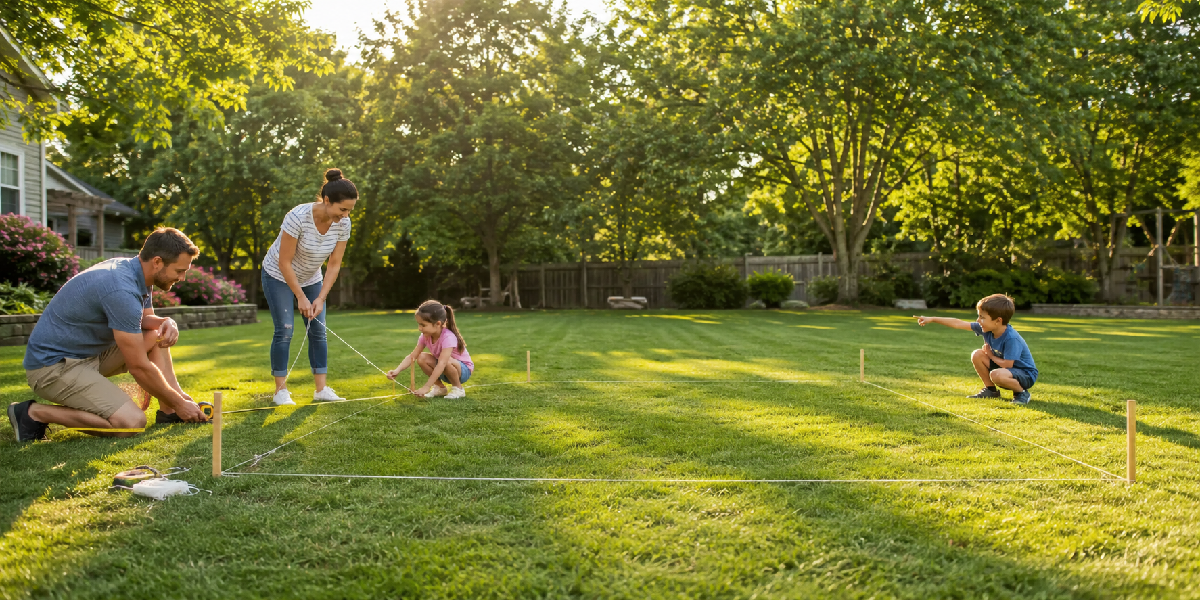
Before making a final decision, physically mark the area in your yard.
Use stakes, spray paint, landscape flags, or string to outline the entire play zone, including safety clearances. Walking the space in person often reveals issues that aren't obvious when looking at measurements on a product page.
As you visualize the area, ask yourself:
- Does the space still feel comfortable once the safety zone is included?
- Is there enough room to move around the playset?
- Will children be playing too close to fences, landscaping, or other obstacles?
- Does the play area leave enough room for mowing and yard maintenance?
We've found that homeowners are often surprised by how much larger the finished play area feels once it's marked out. Taking a few minutes to visualize the full footprint before installation can help prevent disappointment and costly relocation later.
Pro Tip: If you're deciding between two playsets, mark both layouts in your yard. Seeing the actual space each one requires often makes the decision much easier.
Step 3: Clear the Area Completely
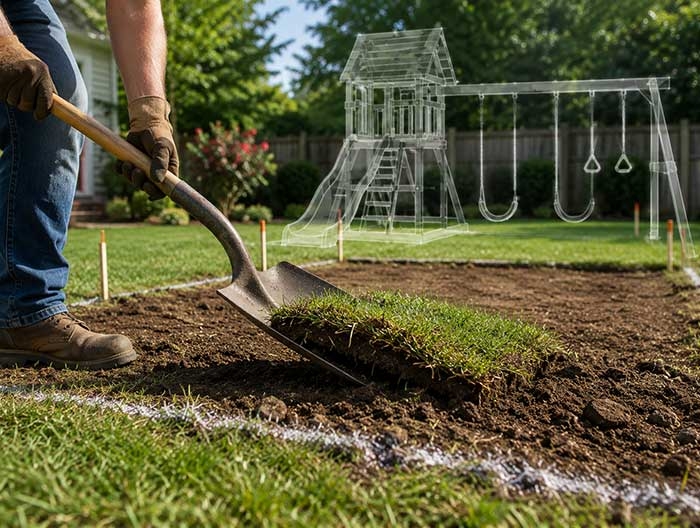
Once you've selected your location and marked out the full play area, it's time to prepare the site.
A properly prepared base helps ensure your playset remains stable, level, and safe for years to come.
Start by removing everything within the play area, including:
- Grass and sod
- Roots and tree stumps
- Rocks and large stones
- Debris and organic material
- High spots and uneven patches
The goal is to create a clean, consistent starting point before any leveling or surfacing materials are added.
Many homeowners are tempted to install a playset directly on existing grass to save time, but this often creates problems later. Grass and organic material eventually break down, which can cause settling, uneven surfaces, and additional maintenance over time.
Removing the sod also makes it easier to install safety surfacing and helps prevent weeds and grass from growing up through the play area.
As you're clearing the site, take the opportunity to look for hidden issues such as exposed roots, buried rocks, sprinkler heads, utility boxes, or drainage concerns that may interfere with installation.
A few extra hours spent preparing the area properly can save a lot of frustration after the playset is assembled.
Pro Tip: Don't just clear the footprint of the playset. Clear the entire use zone, including the safety area around swings, slides, and climbing features.
Step 4: Level the Ground
If there's one step you don't want to rush, it's this one.
A properly leveled site creates the foundation for everything that comes next. No matter how well a playset is designed, it can only perform as well as the ground beneath it.
Before installation, the entire play area should be:
- Flat
- Level
- Even across the full use zone
If your site isn't level, you'll need to:
- Add fill dirt to low areas
- Remove high spots
- Compact the surface thoroughly
- Recheck for level before moving forward
An uneven installation area can lead to:
- Structural stress on the playset
- Uneven wear on components
- Challenges during assembly
- Drainage issues
- Safety concerns over time
Pro Tip: Don't assume your yard is level just because it looks level. Use a long straight board, string line, laser level, or builder's level to verify the grade before installation begins.
Step 5: Fix Drainage Before You Install
Water is one of the biggest long-term threats to any backyard play area.
If your yard tends to hold water, you may notice:
- Soft or unstable ground
- Standing water after rain
- Mulch breaking down more quickly
- Muddy conditions that keep kids from playing
- Increased maintenance around the play area
Before installation, make sure:
- Water flows away from the playset area
- There are no low spots where water collects
- Downspouts don't discharge directly into the play area
- The site dries reasonably quickly after rain
In some situations, you may need to make improvements before installation, including:
- Minor grading to improve water flow
- Adding fill dirt to eliminate low spots
- Installing a gravel base in problem areas
- Making drainage adjustments around the yard
Addressing drainage issues before installation is much easier than trying to fix them after the playset is assembled.
Pro Tip: Visit the installation area a day after a heavy rain. If water is still standing or the ground remains saturated while the rest of the yard has dried out, it's a sign that drainage improvements should be made before installing your playset.
Step 6: Install Safety Surfacing
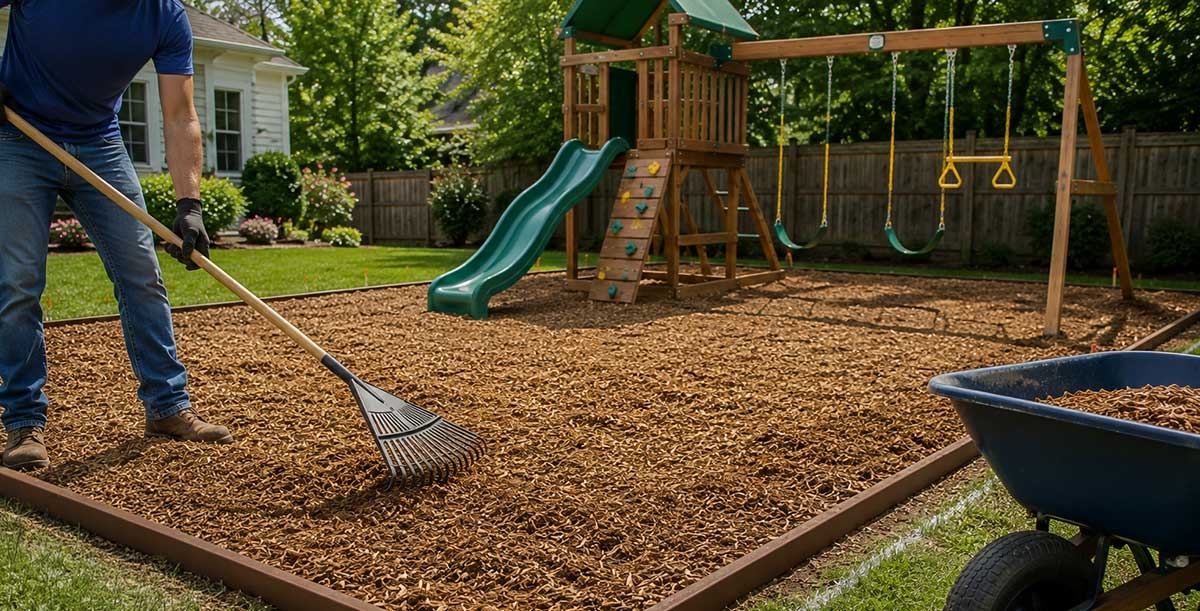
Once the ground is level and drainage issues have been addressed, it's time to install safety surfacing.
This is not an optional step. Safety surfacing helps cushion falls and is an important part of creating a safer play environment for children.
Common safety surfacing options include:
- Engineered wood fiber, mulch, or bark mulch, typically around 9 inches deep
- Wood chips, typically around 12 inches deep
- Sand, typically around 12 inches deep
- Pea gravel, typically around 12 inches deep
Your safety surfacing should cover the entire use zone, including:
- Under the playset
- Around swings
- Slide exit areas
- Climbing and activity zones
- The full safety clearance area surrounding the structure
Over time, loose-fill materials naturally settle and become displaced, especially under swings and at the end of slides. Plan to inspect and replenish surfacing as needed to maintain proper depth.
Pro Tip: When ordering mulch or other loose-fill surfacing, calculate coverage based on the entire safety zone, not just the footprint of the playset.
Common Mistakes to Avoid
- Installing directly on grass
- Ignoring slope or uneven ground
- Not planning for drainage
- Skipping safety surfacing
- Placing too close to fences or structures
These are the issues that lead to problems later.
Final Thought
A great playset starts with the ground under it.
When you take the time to choose the right location, prepare the area properly, and install the right surface, everything else becomes easier: assembly, maintenance, daily use, and most importantly, safety.
Ready to Find the Right Playset?
Now that you know how to prepare your yard for a playset, the next step is choosing a playset that fits your available space, your children's ages, and your family's goals.
Whether you're working with a compact backyard or planning a large outdoor play area, PlayStar offers options designed for a wide range of yard sizes and play styles.
Explore our collections:
Not sure where to start? Check out our guide on Choosing the Right Playset to compare options, understand key features, and find the best fit for your family.