
The Complete Step-by-Step Backyard Playset Planning Guide
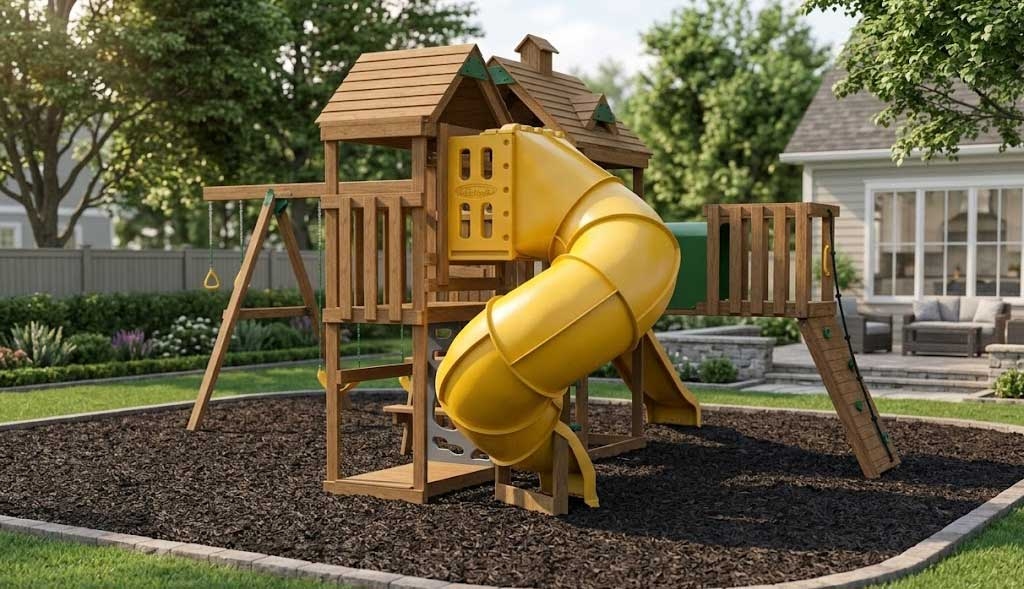
Everything you need to choose the right size, layout, and setup without second-guessing.
Most parents don’t know where to start. We’ll walk you through it step by step so you can make the right decision the first time.
Step 1: Start with Your Yard Size
Before you look at playsets, you need to understand your space.
This is where most people go wrong. They find a playset they like first, then try to make it fit. That usually leads to something feeling too tight, too crowded, or not safe.
The Real Cost of Underestimating Space
The biggest mistake people make is underestimating how much space a playset actually needs. It’s not just the size of the structure. Every playset requires additional clearance around it for safety, movement, and long-term use.
- A smaller playset might only be about 8 x 21 feet, but the actual space required can be closer to 28 x 33 feet once you include proper safety clearance.
- On the larger end, a playset that measures around 34 x 20 feet may require a full install space closer to 58 x 32 feet.
That difference matters. If you only plan for the footprint and ignore the full area requirement, you can end up with a setup that feels cramped, limits how kids play, or worse, creates safety issues.
Your Pre-Planning Checklist
When planning your space, make sure you’re accounting for:
- Full safety clearance, not just the structural footprint.
- Flat, level ground across the entire installation area.
- Open space free of overhanging trees, utility lines, fences, and obstacles.
- Proper drainage to avoid standing water and soggy surfacing.
- Enough sunlight to keep the area dry and usable throughout the season.
Note: Every PlayStar playset includes a defined area requirement. That is the actual number you should be planning around, not just the dimensions of the wooden structure itself.
Which Category Fits Your Yard?
To make your search easier, most backyards fall into one of these structural ranges:
| Yard Size Category | Available Square Footage | Best Fit For |
|---|---|---|
| Smaller Yards | 700 – 875 sq ft | Compact layouts that still prioritize safe clearance and agile movement. |
| Medium Yards | 875 – 1,000 sq ft | Maximum flexibility for extended swing beams, longer slides, and generous spacing. |
| Larger Yards | 1,000+ sq ft | Multi-deck playsets, premium features, and plenty of room to expand over time. |
Step 2: Plan Your Layout
It’s not just about fitting the structure into a corner. It’s about how it operates with the rest of your property.
A playset can technically fit in a space and still feel like it’s in the wrong spot. The goal is to create a setup that feels natural, looks beautiful, and coordinates with how your family actually lives day to day.
Mapping Your Yard's Ecosystem
Before you pick a permanent spot, take a step back and look at the big picture. Where do you spend your time? Where do your kids already gravitate toward when they go outside? What else is actively competing for that grass?
A great layout doesn’t just place a piece of equipment; it connects it seamlessly to the spaces you already love.
Real-World Layout Considerations
- Balance Multi-Use Spaces: Your yard is already doing multiple jobs—hosting a deck, anchoring a fire pit, leaving open space for lawn games, or showcasing garden beds. The playset should complement these zones, not take them over. Establish a setup where kids have a dedicated play zone, adults have a place to unwind, and everyone can enjoy the yard simultaneously.
- Protect Your Sightlines: You should be able to check on your kids easily from the indoor spaces where you spend the most time. When placing your set, verify the sightlines from your kitchen window, back patio, and main living areas. If you can keep an eye on things without constantly stepping outside, the playset gets used more and feels safer.
- Leave Room for Maintenance: This is something almost no one plans for until it's too late. Can you easily navigate a lawnmower around the borders? Does your protective safety surfacing run flush against a fence line where weeds will take over? Make sure your layout leaves an accessible path for basic yard upkeep.
Step 3: Prepare Your Yard
A little preparation now saves massive headaches down the road. This is the foundation that determines how your playset looks, how it performs, and how safe it remains over time.
Once you’ve locked in the perfect location, you must ensure the ground is ready. A playset should never be installed on uneven, soft, or poorly drained ground. It should also never be placed directly on raw grass. Skipping proper ground prep is the single most common installation mistake, and it leads to structural warping and safety hazards that are incredibly difficult to fix later.
Ground Preparation Steps
Before your delivery arrives, your site must be:
- Flat and level across the entire safety zone.
- Cleared of all sod, stubborn roots, large rocks, and debris.
- Properly graded to ensure rainwater flows away from the play area instead of pooling into a muddy mess.
For most properties, this involves stripping away the top layer of grass, bringing in clean fill dirt to level out slopes, and thoroughly compacting the base before you ever think about assembling the wood.
Selecting Your Safety Surfacing
Every playset requires proper, shock-absorbing surfacing throughout the entire designated use zone. This is a non-negotiable step to protect your kids from inevitable stumbles.
Based on trusted safety guidelines, these are the recommended depths you should maintain:
- Double Shredded Bark or Mulch: 9 inches
- Engineered Wood Chips: 12 inches
- Fine Sand: 12 inches
- Common Gravel: 12 inches
Remember, this material needs to span the entire area requirement calculated in Step 1, creating a protective cushion well past the perimeter of the physical playset.
Step 4: Plan for Safe Play
Safety isn’t complicated, but it does require intentional design. The goal isn’t to eliminate risk entirely—it’s to build an environment where your kids can confidently test their limits, explore, and build physical coordination safely.
Designing a Conflict-Free Zone
Keep the play area completely clear of obstacles. Swings, slides, and climbing walls require empty space for high-energy movement. Ensure your finished safety zone remains entirely free of fences, low-hanging tree branches, patio furniture, and hard landscape borders.
Age-Appropriate Milestones
One of the best things about a quality system is its ability to match your kids' developmental stages. That natural hesitation a child feels the first time they look down a high slide or reach for a climbing rung is part of growing up.
By keeping early play supervised and matching activities directly to their current ages, you give them a safe environment to conquer those fears.
- For Toddlers: Focus on full-strap child seats, lower platforms, and easy-to-grip climbing ramps.
- For Older Kids: Swap in standard belt swings, high-performance air riders, and challenging gym rings.
Step 5: Plan for Growth
Your kids won’t stay the same age, and your backyard investment shouldn't be trapped in a time warp either. A common mistake families make is buying a playset exclusively for the ages their kids are right now, rather than planning for what they will want in two or three seasons.
A premium playset is not a single-summer purchase. It should be an evolving feature that your family grows into, not out of.
The Power of a Modular System
When you choose a flexible, modular system, you aren't locked into a single configuration forever. Instead of tearing down an entire set when your kids outgrow the toddler features, you can simply swap out individual components to ramp up the challenge.
You can trade baby swings for heavy-duty tire swings, add advanced climbing walls to an existing platform, or introduce specialized gym features as their strength and coordination explode. Planning for this growth ensures you get maximum value and keep your kids playing outside for a decade.
Step 6: Choose the Right Playset
Now that you understand your true yard size, mapped your ideal layout, and sketched out a plan for your family's future, you have already completed the hardest part. You are officially ready to choose.
The secret to choosing the right playset is to avoid looking at every single option on the market. Instead, head to our collection page and immediately apply your custom filters to narrow the playing field.
How to Filter Your Selection:
- Area Requirements: Toggle this filter first to instantly eliminate models that exceed your prepared yard footprint.
- Number of Kids: Ensure the structure has enough simultaneous active zones to accommodate your family and neighborhood playdates.
- Play Deck Size & Activities: Pick the exact combination of slides, roofs, and climbing features that match your lifestyle.
By utilizing these parameters, you turn an overwhelming scrolling session into a quick, targeted selection process.
Expert Selection Resources:
Find the Right Playset for Your Yard
Use our smart filters to narrow down your options and focus exclusively on what fits your space, your budget, and your family.
Common Questions About Planning a Backyard Playset
1. How much space do I need for a playset?
The actual space required is significantly larger than the physical footprint of the wooden tower. For safe play, you must factor in a perimeter use zone. For example, a compact set measuring 8 x 21 feet actually requires a 28 x 33 foot clear area once standard safety clearances are integrated. Always design around the "area requirement" listed on the product page.
2. What should I put under a playset?
You should always install a dedicated, shock-absorbing safety material. Approved options include double-shredded bark mulch (9 inches deep), engineered wood chips (12 inches deep), fine play sand (12 inches deep), or washed gravel (12 inches deep). This material must extend across the entire safety use zone.
3. Can I install a playset on uneven ground?
No. Installing on a slope puts uneven stress on the structural joints, accelerates wear, and creates immediate safety risks. The entire installation site must be completely flat and level before assembly begins. If your yard has a slope, you will need to grade the area or cut a level tier into the hillside.
4. Is grass a safe surface for a playset?
No, grass alone is not considered a safe playground surface. Over time, high-traffic areas (like the base of slides and under swings) will wear down to hard-packed dirt. Furthermore, grass does not offer enough impact absorption to protect against fall-related injuries.
5. Do I need to leave a buffer space around the playset?
Yes. Every playset requires a completely unobstructed safety clearance zone extending around all sides. This zone must remain entirely clear of hard landscaping, property fences, trees, patio furniture, and garden retaining walls so children can run and swing without collision risks.
Ready to Build Your Backyard?
Start with the right playset for your space, your yard, and how your family actually uses it.
You’ve done the planning. Now it’s just about choosing the playset that fits it all together.
Shop Playsets Get Help Choosing
Every PlayStar playset is engineered to premium safety standards, proudly built to last, and designed to grow alongside your kids.